

Conversations with an AI
Chapter 1
With English as a second language, I’ve always been a little self-conscious about my pronunciation of the more complex English words because I learned the majority of them through reading—verbal proficiency acquisition in a native tongue is more intuitive than in a language first learned at the age of eight! So, although I believe myself to be proficient in English, every once in a while, I’m at a loss as to the best way to express my views accurately.
My access to the various spellcheckers over the last 20 years has proven invaluable. Now, thanks to next-generation artificial intelligence (AI), machine learning technologies, and tools, I can write this series of essays with citations and accurately referenced information. Since I started using these powerful tools a year ago, I’ve learned much more and changed how I write. For example, I can now express myself better in English and my native language, Afrikaans.
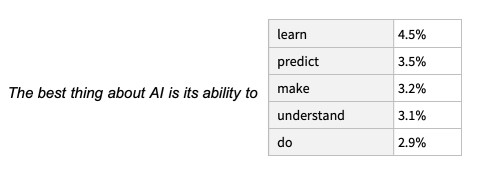
This led me down a rabbit hole to understanding more about AI and how it works. It meta-analyses massive amounts of data and then rates the probability. The Steven Wolfram blog introduces AI: “The first thing to explain is that what ChatGPT is always fundamentally trying to do is to produce a “reasonable continuation” of whatever text it’s got so far, whereby “reasonable” we mean “what one might expect someone to write after seeing what people have written on billions of webpages, etc.”
Moreover, he adds that assuming the search query “The best thing about AI is its ability to” were used, it would reach a conclusion: Imagine scanning billions of pages of human-written material (on the Internet and in digital books, for example) and locating all occurrences of this text, then determining what word follows what percentage of the time. ChatGPT performs a similar function, except that (as I will explain) it does not examine textual text; rather, it searches for phrases that “match in meaning.” Yet, the ultimate result is a ranked list of words that may follow, together with “probabilities”:
In 2023, AI was made available to the public free of charge by OpenAI. As expected, the public’s response to this has been quite polarised: those who are deeply concerned AI will replace them in the workplace, and those who see AI as “augmenters” or “super helpers,” learning and evolving in concert with organisations and employees. However, the fear of a “terminator-like future” is being challenged by the limitless possibilities that lie ahead. We now find ourselves sitting squarely within the Transformation substage of the Information Technology Age – the mechanical and industrial stages are a distant memory.
Michal Kosinski, Associate Professor of Organizational Behaviour at Stanford University, put several versions of Open AI’s recently released ChatGPT through “Theory of Mind” (ToM) tasks designed to test a child’s ability to “impute unobservable mental states to others”. In humans, this would involve looking at a scenario involving another person and understanding what’s happening inside their head.
The November 2022 version of ChatGPT (trained on GPT-3.5) solved 94% or 17 of 20 Kosinski’s bespoke ToM tasks, putting the model on par with the performance of a nine-year-old child – an ability that “may have spontaneously emerged” by virtue of the model’s improving language skills, Kosinski says.
For a moment, let’s allow that to sink in
Over the following months, AI will continue to grow and evolve based on our interactions with it (what we teach it). It will be our continued responsibility to do so ethically, just as a good parent would take on the responsibility of guiding a young child to be a positive contributor to the world. AI can revolutionise our world positively, from developing more accurate medical diagnoses to helping manage climate change. However, we are accountable for the implications of its use so that we do not cause more harm.
It is with optimism and excitement that I share “Conversations with an AI”, a series based on actual conversations I had with artificial intelligence, and which was inspired by my newly published whitepaper, Improving DEI (Diversity, Equity, and Inclusion) in Systematic Hiring In collaboration with Nin Tran, Chief Executive Officer of SnapBrillia.
And how did my conversation with the AI feel? It felt as though I was having a good cup of coffee and a wonderful conversation with an old friend.
References:
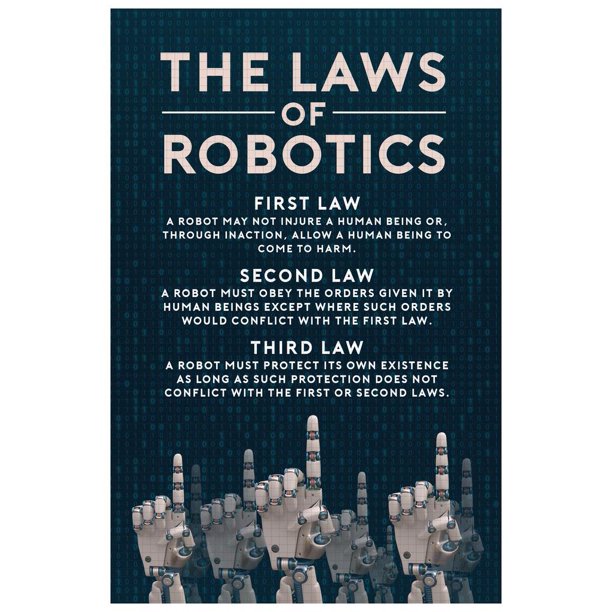
Asimov, Isaac. (1950). Run Around. I, Robot (The Isaac Asimov Collection ed.). Doubleday, New York.
Asimov Isaac. (1972) The Gods Themselves. Fawcett Crest 9731972. http://catalog.hathitrust.org/api/volumes/oclc/5885384.html.
