

Conversations with an AI
Chapter 2
With Artificial intelligence (AI) made available to the public free of charge in 2023, we now find ourselves within the Transformation substage of the Information Technology Age, and the mechanical and industrial stages are now a distant memory. Over the coming months, AI will continue to grow and evolve based on our interactions with it (what we teach it). Our continued responsibility will be to do so ethically, just as a good parent would guide a child to contribute positively to the world. It is with optimism and excitement that I share “Conversations with an AI”, a series based on actual conversations I had with artificial intelligence, and which was inspired by my newly published whitepaper, Improving DEI in Systematic Hiring, in collaboration with Nin Tran, Chief Executive Officer of SnapBrillia.
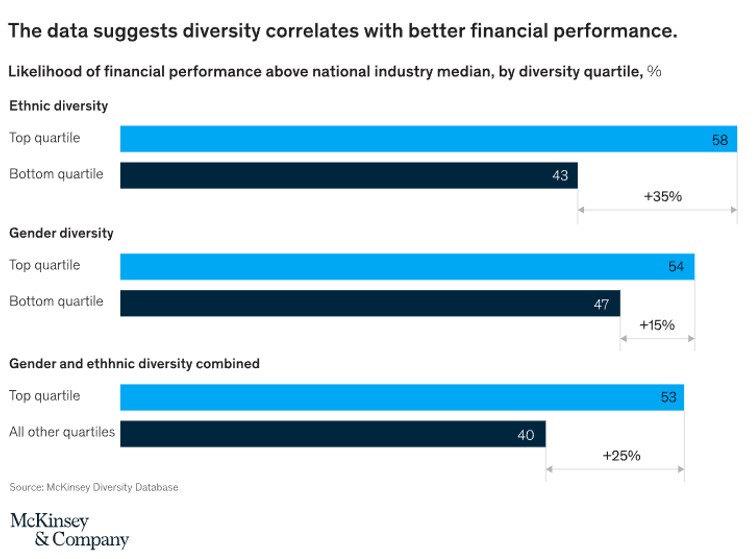
Research has shown that companies with diverse teams are more likely to outperform their peers. The 2020 McKinsey report, Diversity wins: How inclusion matters, found that companies with diverse executive teams were likelier to have above-average profitability than those with less diverse teams.
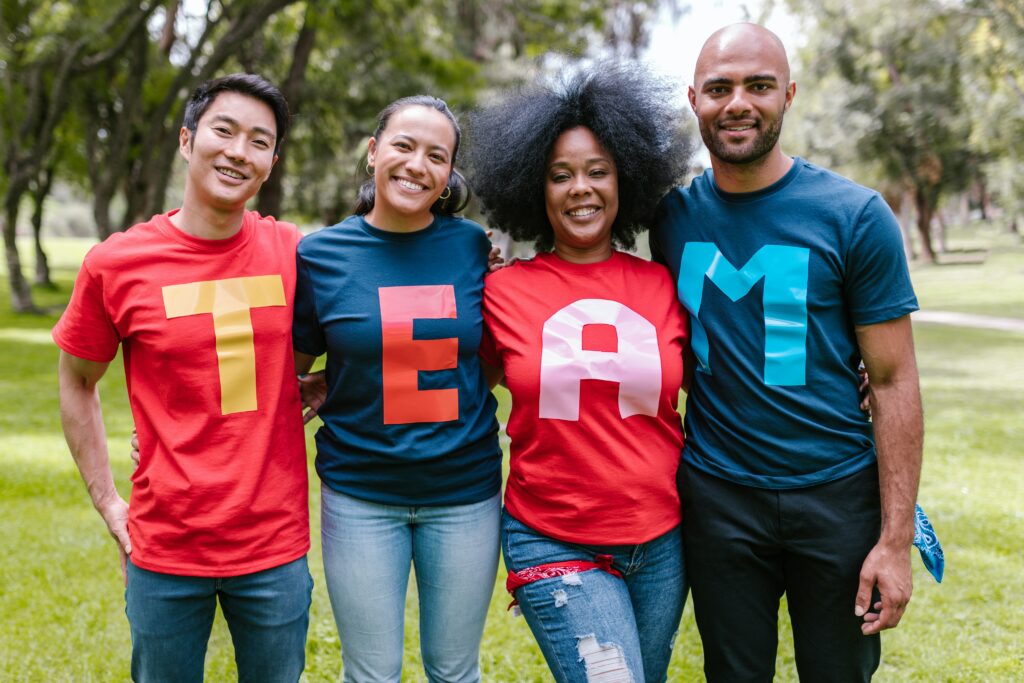
There are various business cases for having a diversified workforce across departments in a company. Diverse teams contribute a range of perspectives and experiences, which can result in new and innovative concepts. When team members are diverse in their backgrounds, they are more likely to approach issues in original and inventive ways, resulting in more efficient problem-solving and better business results.
Furthermore, diverse teams are also better at making decisions because they are less inclined to give in to groupthink, or “echo chambers,” which occur when team members agree on everything and neglect to consider all alternatives. Diversified teams are more likely to keep in mind a significantly more extensive range of opinions because they include team members with diverse backgrounds and experiences, which therefore improves decision-making. In fact, a publication by Sage Journals, Adam Galinsky et al. states that “Among groups where all three original members didn’t already know the correct answer, adding an outsider versus an insider actually doubled their chance of arriving at the correct solution, from 29% to 60%. The work felt harder, but the outcomes were better.”
Workplace diversity may facilitate the creation of an increasingly diverse workforce where all employees feel valued and respected, which will again boost employee engagement and retention. In addition, employee engagement and work engagement are more likely to develop when employees feel like they belong and are free to bring their whole selves to work, increasing employee satisfaction and retention. To this point, Everise states: “A diverse customer service team is better equipped to connect your brand with customers. According to a survey by Forbes Insights, 65% of senior executives said recruitment of diverse employees was their top priority.”
Diverse teams are more likely to comprehend the demands and preferences of a broader range of customers, thus increasing market reach and penetrating new markets. In addition, team members from divergent backgrounds can better understand the thoughts and experiences of different customer groups. Understanding these differences helps them make products and services that meet the needs of all customers.
In 2015, landmark paper, Diversity wins, How, inclusion matters, McKinsey & Company found that companies in the top quartile for gender diversity are 15% more likely to have financial returns above their respective national industry medians, and companies in the top quartile for ethnic and cultural diversity are 35% more likely to have financial returns above their respective national industry medians.
But where are the actual companies that have proven the business case for increased profits and employee retention?
Microsoft‘s global workforce diversity and inclusion initiatives have been linked to an increase in market share. In 2021, the technology giant reported 29.7% female participation in its workforce, an increase of 1.1 percentage points over 2020. In senior management, Additionally, in 2019, the representation of women globally increased to 21.1%, up 1.1 percentage points over 2020. In 2019, the company reported that its workforce is more diverse than ever, with the percentage of women and underrepresented minorities increasing in technical and non-technical roles. The company also reported that its inclusive culture has contributed to a more engaged and productive workforce.
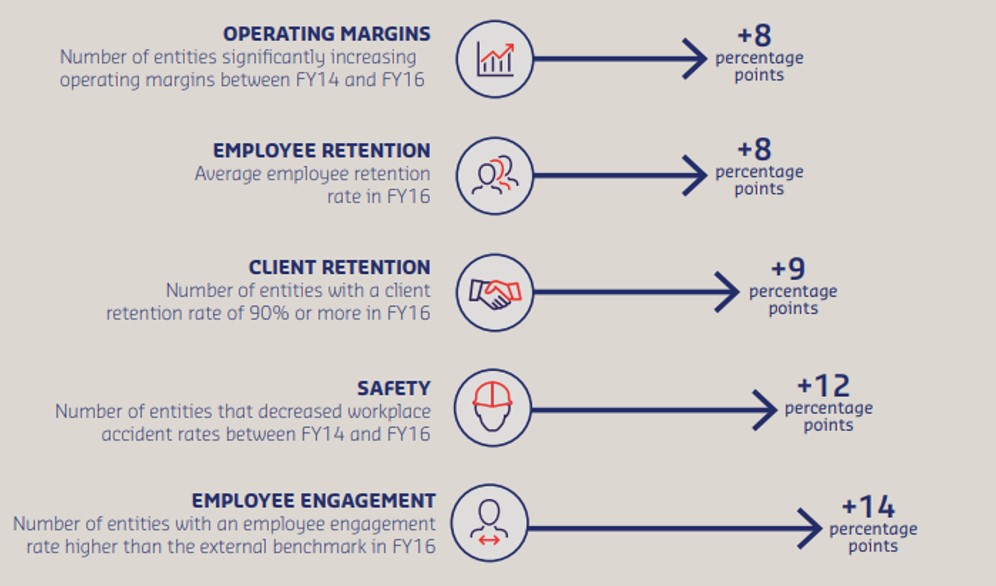
In 2018, Sodexo released a report that found that gender-balanced management teams achieved a higher percentage of profits than their unbalanced counterparts. The company said that the operating margins of teams with equal numbers of men and women went up by 5.6%.
Coca-Cola has been recognised for its efforts to increase diversity and inclusion, including its commitment to hiring and promoting women and people of colour.
In fact, DiversityInc lists the top 50 most diverse companies in the United States every year.
Marriott International has made diversity and inclusion a crucial part of its business strategy. The company’s diversity and inclusion initiatives have been linked to increased customer satisfaction and loyalty.
“We have a wide variety of programs — some in place for decades — but first and foremost it’s our longstanding cultural foundation that guides our deep commitment to diversity, equity and inclusion. Since our founding as a small root beer stand in 1927, we’ve stayed true to our core value of putting people first and a simple philosophy: if we take care of our associates, they will take care of our customers, and our customers will come back. Our culture guides how we interact with people, how we do business every day, and how we respond to global challenges. With this foundation and accountability at the highest levels of our company, we work to ensure that all of our key stakeholders experience opportunity, community and purpose throughout their engagement with Marriott.”
Marisa Milton, senior vice president, global talent acquisition and inclusive opportunity, Marriott
Fortune recognised Marriott as one of the top 100 best companies to work for ranked at number 15 and on the list for 25 years.
In conclusion, diverse teams are more likely to outperform their competitors and build an increasingly varied workforce, contributing to greater employee engagement and retention rates. There is a correlation between initiatives promoting diversity and inclusion, increased profits, and employee engagement and retention.
References:
Empowering Change: How to Support People of Colour in the Workplace.
McEvoy, Olivia. “Diversity… Is It Good for Business, Really?” Accountancy Ireland, vol. 49, no. 2, Institute of Chartered Accountants In Ireland, Apr. 2017, p. 24.
Forbes: Leadership Barriers To Diversity, Equity And Inclusion, And How To ….
